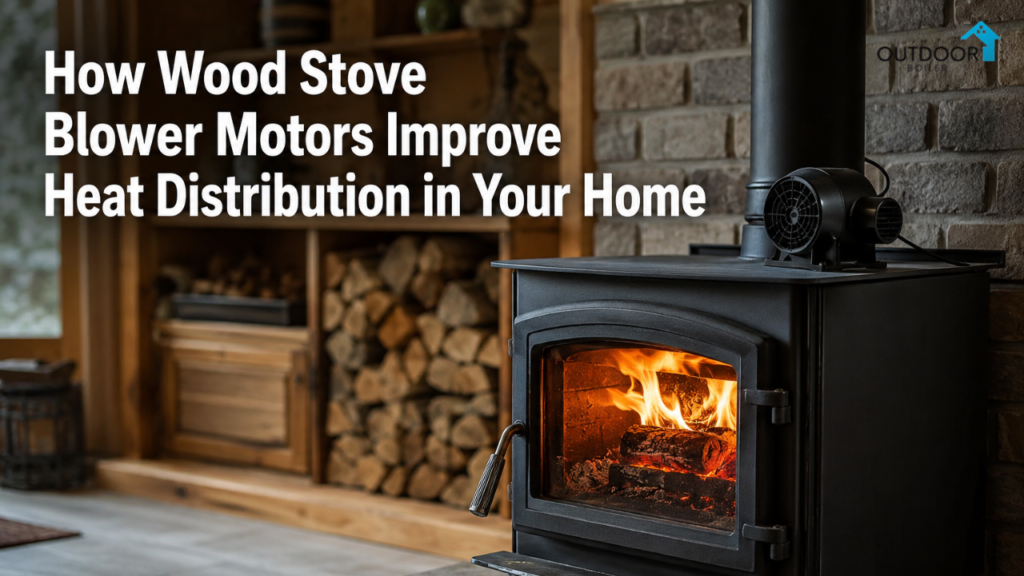
Wood stove blower motors improve heat distribution by circulating warm air from your wood stove throughout your living space instead of allowing heat to remain concentrated around the unit. This helps create a more comfortable indoor environment while making your heating system work more efficiently.
Introduction
There is nothing quite like the warmth of a wood stove on a cold day. The crackling fire creates a cozy atmosphere, and the radiant heat makes any room feel inviting. However, many homeowners notice that while the area closest to the stove becomes very warm, rooms farther away often stay chilly.
This is where wood stove blower motors make a significant difference. Rather than relying only on natural heat movement, these motors help push warm air farther into your home, improving comfort and reducing temperature differences between rooms. Understanding how they work and how to maintain them can help you get the most out of your wood heating system.
What Are Wood Stove Blower Motors?
Wood stove blower motors are electric motors that power blower fans installed on or near compatible wood stoves. Their primary purpose is to circulate heated air into the surrounding living space.
Without a blower motor, a wood stove mainly relies on radiant heat and natural air circulation. While this method effectively warms the immediate area, it often struggles to distribute heat evenly throughout larger homes or multiple rooms.
A blower motor increases airflow by moving heated air away from the stove and into the room, allowing more consistent temperatures across your home.
How Heat Naturally Moves Through Your Home
To understand why blower motors are helpful, it is useful to know how heat behaves naturally.
Warm air rises because it is less dense than cool air. This process, called convection, causes heat to collect near ceilings or remain close to the stove before gradually spreading throughout the home.
Natural convection works well in smaller spaces, but it has limitations, including:
- Uneven room temperatures
- Slow heat distribution
- Cold spots in distant rooms
- Heat buildup near ceilings
Adding a blower motor accelerates this natural process by actively circulating warm air instead of waiting for it to move on its own.
How Wood Stove Blower Motors Improve Heat Distribution
Faster Warm Air Circulation
One of the biggest advantages of a blower motor is its ability to move heated air quickly.
Instead of allowing warmth to remain concentrated around the stove, the blower pushes heated air outward, helping the room warm up more rapidly.
More Even Temperatures
Without a blower, you may notice that the room with the stove feels much warmer than the rest of your house.
Wood stove blower motors help reduce these temperature differences by continually moving warm air throughout the space.
Better Comfort
A more evenly heated home feels noticeably more comfortable.
Rather than sitting close to the stove for warmth, family members can enjoy comfortable temperatures in more areas of the home.
Improved Heating Efficiency
When heat is distributed effectively, homeowners often find they can maintain comfortable temperatures without overloading the stove.
Although efficiency depends on many factors, improved air circulation allows more of the heat produced by the stove to be used throughout the home.
Benefits Beyond Heat Distribution
Blower motors provide several additional advantages.
Better Use of Existing Heat
Instead of allowing heat to accumulate near the ceiling, blower motors help keep warm air circulating where people actually live and spend time.
Reduced Temperature Stratification
Warm air naturally rises, leaving cooler air near the floor.
Blower fans help mix air throughout the room, reducing this layering effect and creating a more balanced indoor environment.
Improved Comfort in Larger Spaces
Open floor plans and larger living areas often benefit the most from blower-assisted circulation because heat can travel farther than it would through natural convection alone.
Signs Your Wood Stove Blower Motor Is Working Properly
A properly functioning blower motor should:
- Produce consistent airflow
- Operate with minimal vibration
- Run smoothly without unusual noises
- Distribute warm air evenly throughout the room
If you notice reduced airflow, squealing sounds, grinding noises, or intermittent operation, the motor may need inspection or maintenance.
Simple Maintenance Tips
Like any moving mechanical component, blower motors require occasional care.
Keep Dust Away
Dust and ash can accumulate around the fan blades and motor housing over time.
Cleaning these areas helps maintain proper airflow and prevents unnecessary strain on the motor.
Check for Loose Components
Occasionally inspect mounting hardware and fan blades for signs of looseness or wear.
Listen for Unusual Sounds
New noises often indicate worn bearings, debris inside the fan, or other developing issues.
Addressing problems early can help prevent more expensive repairs later.
Follow Manufacturer Recommendations
Always consult your stove manufacturer’s maintenance instructions regarding cleaning schedules, lubrication requirements if applicable, and replacement intervals.
Can Every Wood Stove Use a Blower Motor?
Not every wood stove is designed to accommodate a blower.
Some models include factory-installed blowers, while others offer optional blower kits. Before purchasing a replacement motor or adding a blower, verify compatibility with your specific stove model.
Using the correct components helps ensure safe operation and optimal performance.
When Should You Replace a Wood Stove Blower Motor?
A blower motor may need replacement if it exhibits:
- Persistent loud noises
- Reduced airflow despite cleaning
- Frequent overheating
- Failure to start
- Excessive vibration
- Visible signs of electrical damage
Replacing a worn motor promptly helps restore consistent airflow and maintains the overall performance of your heating system.
Frequently Asked Questions
Do wood stove blower motors make a noticeable difference?
Yes. In many homes, blower motors significantly improve how quickly and evenly warm air spreads throughout the living space.
Do blower motors use a lot of electricity?
Most wood stove blower motors consume relatively little electricity compared to many household appliances while providing improved heat circulation.
Should the blower run continuously?
Many homeowners operate the blower while the stove is producing steady heat. Always follow the operating recommendations provided by your stove manufacturer.
Can I install a blower motor myself?
Some blower kits are designed for homeowner installation, while others may require professional assistance depending on the stove model and electrical connections.
Final Thoughts
Wood stove blower motors play an important role in improving heat distribution by moving warm air more effectively throughout your home. They help reduce cold spots, improve comfort, and make better use of the heat your wood stove already produces. With routine maintenance and proper operation, a blower motor can contribute to a more balanced and enjoyable heating experience during colder months.
According to the United States Environmental Protection Agency, improving the efficiency of wood heating appliances and following proper operation practices can enhance home heating performance while reducing emissions.
Keep Your Wood Stove Performing at Its Best
Whether you are maintaining your current system or looking for the right replacement parts, understanding how wood stove blower motors work is the first step toward better home heating. If you have questions about compatible blower motors or need expert guidance, contact us or visit our website at outdoorboiler.com to learn more and find the information you need for your wood stove system.