
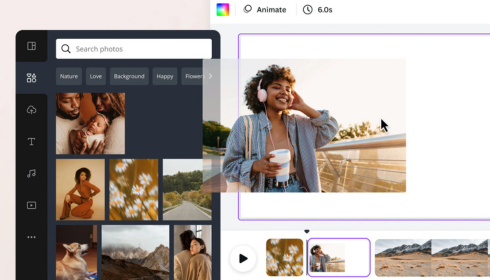
In an era where digital content competes fiercely for attention, static images often fall short in capturing and holding viewer interest. Transforming a single photograph or graphic into a dynamic video can elevate its narrative power, turning a momentary glimpse into an immersive experience. This process of converting images to video has become an essential tool for creators, marketers, educators, and storytellers alike, allowing them to infuse emotion, movement, and context into otherwise motionless visuals.
The Limitations of Static Imagery in Modern Narratives
Photographs and illustrations excel at freezing a perfect moment, but they inherently lack temporal progression. A stunning landscape photo might evoke wonder, yet it cannot guide the viewer’s eye through layers of depth or unfold a sequence of events. In storytelling, whether for social media posts, presentations, or personal projects, audiences crave motion that mirrors real-life experiences.
Static images demand that viewers interpret everything at once, which can overwhelm or underserve the intended message. Without subtle animations or transitions, key elements might go unnoticed. Videos, by contrast, control pacing, directing attention sequentially and building emotional arcs that static formats simply cannot achieve.
Core Benefits of Image-to-Video Transformation
Converting an image to video unlocks several advantages that directly enhance storytelling effectiveness.
First, it introduces kinetic energy. Gentle pans across a scene, known as the Ken Burns effect, reveal details gradually, mimicking how humans explore environments. This technique sustains engagement far longer than a fixed view.
Second, layering motion elements—such as drifting clouds over a mountain vista or subtle particle effects in a product shot—adds realism and atmosphere. These enhancements make abstract concepts tangible and emotional scenes more poignant.
Third, incorporating audio tracks, voiceovers, or ambient sounds transforms visual information into a multisensory narrative. A travel photo paired with local music or narration can transport viewers, fostering deeper connections than silence ever could.
Finally, video formats enjoy superior algorithmic favoritism on most platforms, increasing reach and interaction rates substantially compared to images alone.
Essential Techniques for Effective Conversion
Several proven methods exist to breathe life into still images, each suited to different storytelling goals.
One foundational approach involves parallax effects, where foreground and background elements move at varying speeds. This creates an illusion of three-dimensional depth, ideal for portraits or architectural shots. By separating layers digitally, creators simulate camera movement through space.
Zoom sequences offer another powerful tool. Starting wide to establish context, then gradually zooming into focal points, guides the narrative flow intentionally. Reverse zooms achieve dramatic reveals, perfect for mystery or surprise elements in stories.
Animated overlays provide versatility. Text animations that fade in sequentially can narrate events chronologically. Graphical elements like arrows, highlights, or icons direct attention precisely where needed, clarifying complex ideas in educational or explanatory content.
For sequences of related images, smooth transitions such as dissolves, wipes, or morphs create cohesive short films from photo collections, preserving individual impact while building progression.
Tools and Technologies Driving the Process
A range of software solutions has democratized image-to-video conversion, from professional suites to accessible mobile applications.
Advanced editing platforms allow precise keyframe animation, enabling control over every aspect of movement, timing, and effects. These tools support mask creation for isolating subjects, facilitating targeted animations that keep backgrounds stable while foreground elements move naturally.
Artificial intelligence has revolutionized the field recently. Machine learning algorithms can automatically detect subjects, generate intermediate frames for smooth motion, or even extrapolate missing elements to create seamless pans and zooms. These automated processes reduce production time dramatically while maintaining high quality.
Cloud-based services offer templates specifically designed for image animation, allowing users to upload photos and select storytelling styles—romantic, dramatic, energetic—that apply coordinated effects instantly.
Mobile applications bring this capability to smartphones, enabling on-the-go creation with intuitive touch controls for drawing motion paths directly on images.
Strategic Applications Across Industries
The impact of image-to-video conversion extends across diverse fields, each leveraging the technique uniquely.
In marketing, product images transformed into rotating showcases or lifestyle scenarios demonstrate features dynamically, boosting conversion rates. Real estate listings gain immersion through virtual tours built from panoramic photos.
Journalists and documentarians use the method to animate historical photographs, bringing past events vividly into present awareness. Subtle movements and period-appropriate music enhance emotional resonance without altering factual integrity.
Educators convert diagrams and illustrations into step-by-step animations, improving comprehension of complex processes. Scientific visualizations benefit particularly, as static models become explorable from multiple angles.
Personal storytelling flourishes through memorial videos or travel recaps, where family photos gain narrative depth through thoughtful motion and music.
Creative Considerations for Maximum Impact
Successful conversions demand thoughtful choices beyond technical execution.
Timing remains critical. Movements should feel natural—too rapid creates anxiety, while excessively slow bores viewers. Generally, subtle animations lasting several seconds per element maintain optimal flow.
Color grading unifies the visual language. Consistent tones across animated sequences establish mood, whether warm and nostalgic or cool and professional.
Music selection profoundly influences emotional interpretation. Instrumental tracks avoid competing with potential voiceovers while reinforcing the story’s tone.
Aspect ratio decisions affect platform performance. Vertical formats dominate mobile viewing, while horizontal suits traditional presentations.
Overcoming Common Challenges
Creators frequently encounter hurdles that, when addressed, significantly improve outcomes.
Resolution maintenance proves essential. Animations can reveal compression artifacts invisible in static views, so starting with high-quality source images prevents degradation.
File size management balances quality against shareability. Optimized export settings ensure smooth playback across devices without excessive data demands.
Consistency in multi-image projects requires careful planning. Uniform animation styles and transition speeds create professional polish.
Copyright awareness guides asset selection. Using licensed music and properly credited imagery avoids legal complications.
Future Directions in Dynamic Visual Storytelling
Emerging technologies promise even more sophisticated conversions. Advanced generative models may soon create entirely new frames based on single images, extending short clips into longer narratives. Virtual reality integration could transform 2D photos into fully navigable environments.
Real-time processing advancements will enable live image animation during broadcasts or streams, opening new possibilities for interactive storytelling.
As processing power increases and algorithms refine, the boundary between photography and videography continues blurring, offering creators unprecedented tools for expression.
Mastering Motion for Memorable Messages
Converting images to video represents more than a technical process—it embodies a fundamental shift in how stories are told digitally. By adding the dimension of time to spatial compositions, creators gain precise control over narrative pacing, emotional delivery, and audience engagement. Whether for professional campaigns, educational purposes, or personal expression, this transformation elevates communication from mere observation to genuine experience. As tools become ever more accessible and powerful, the ability to animate still moments stands as an essential skill for anyone seeking to tell compelling stories in the visual age.