Few things make a home feel “off” faster than a stubborn pet smell that keeps coming back—especially when you know you cleaned it. The good news: most pet stains and odours can be removed (and prevented from resurfacing) without bleach, without harsh fumes, and without damaging your carpet fibres.
Why bleach is the wrong tool for pet stains (even when you’re desperate)
Bleach feels like a shortcut because it’s associated with “disinfection” and “whiteness.” On carpets, it often creates bigger problems than the stain you started with.
1) It can permanently damage carpet fibres and dye
Many carpets are made from nylon, polyester, polypropylene, or wool blends. Bleach can:
- Strip colour (leaving a lighter patch you can’t “clean back”)
- Weaken fibres (leading to fuzzing, matting, or faster wear)
- React unpredictably with stain residues, creating yellowing
2) Bleach doesn’t solve urine odour at the source
Urine odour isn’t just “germs.” It’s chemistry:
- Fresh urine contains urea and other compounds
- As it dries, bacteria break it down into ammonia-like smells
- Uric acid crystals can bond to fibres and backing
Bleach may mask smell temporarily, but it usually won’t dissolve and remove uric salts embedded below the surface.
3) It can create hazardous fumes
Mixing bleach with other common cleaners (especially vinegar, ammonia-based products, or some bathroom sprays) can release dangerous gases. In a household with pets and children, it’s not worth the risk.
The professional mindset: stain removal vs odour removal
To truly fix pet stains and odours, think in layers:
- Surface fibres (what you see)
- Carpet backing (where liquids spread sideways)
- Underlay/padding (where odours “live” and resurface, especially on humid days)
- Subfloor (in severe cases)
A stain can look “gone” while the odour remains trapped underneath. That’s why the smell returns when:
- The room warms up
- Humidity rises
- Someone steps on the area and reactivates residue
Your “no-bleach” pet stain first-aid kit
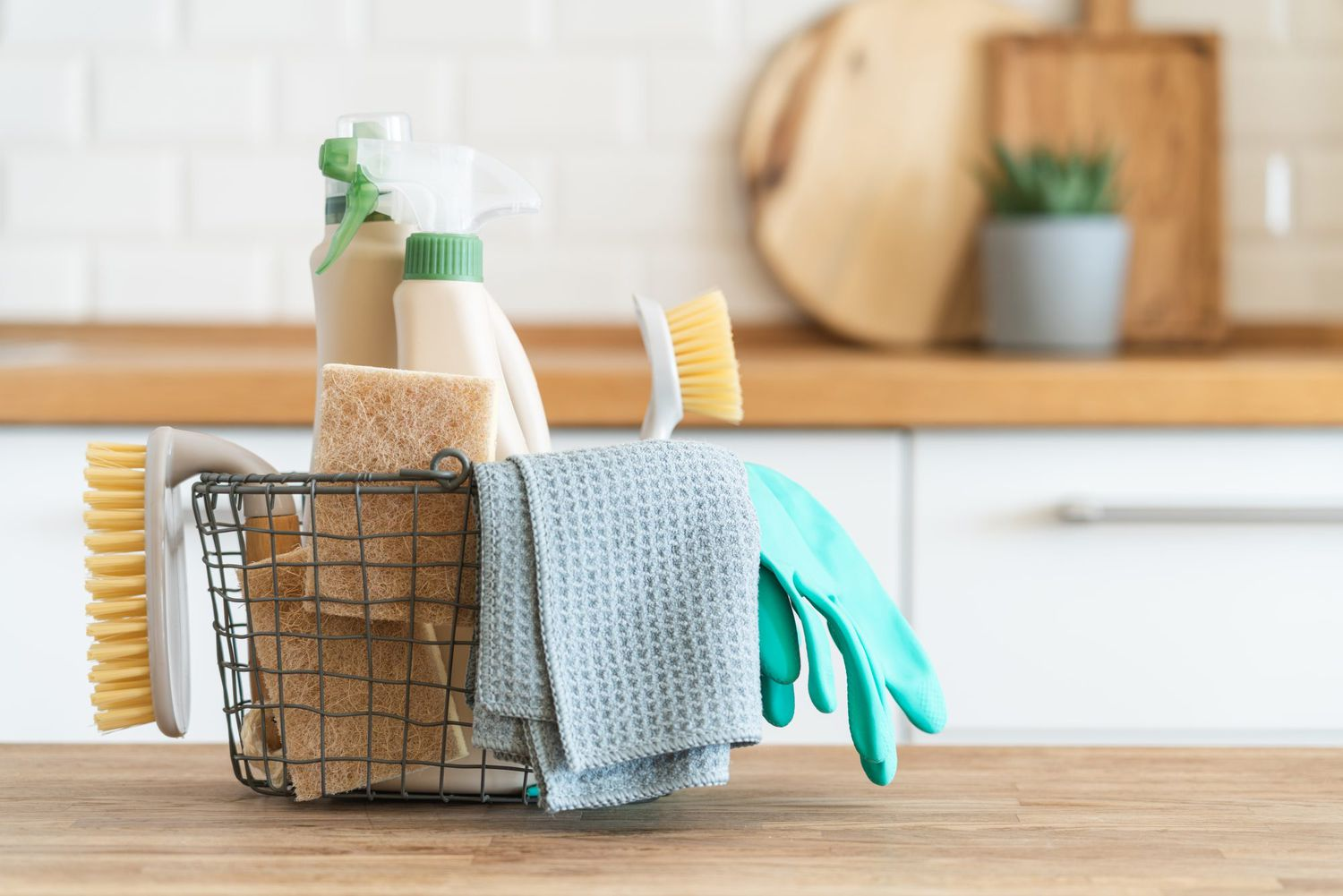
You don’t need a cupboard full of products. You need the right ones:
Essentials
- White absorbent towels or paper towels (avoid dyed cloths)
- A blunt spoon or scraper (for solids)
- Spray bottle
- Cold water
- Enzymatic cleaner (specifically for pet urine/organic odours)
- Wet/dry vacuum or carpet extractor (ideal but optional)
- Baking soda (for deodorising after cleaning—when used correctly)
Optional but helpful
- pH-neutral carpet rinse or plain water rinse step
- Blacklight torch to locate old urine spots (use at night)
Pro tip: If you can only buy one product, make it a reputable enzyme-based pet cleaner. That’s the closest “professional-level” solution available to most households.
Step one: identify what you’re cleaning (it matters)
Different stains require different chemistry. Here’s how professionals carpet cleaners categorise common pet messes:
- Urine: needs enzymes + thorough extraction and rinse
- Vomit/diarrhoea: needs removal of solids + gentle cleaning + enzyme treatment
- Greasy residue (from skin oils or pet beds): needs a mild degreaser designed for carpets
- Mud: needs drying + dry vacuuming first (never scrub wet mud deeper)
If you’re not sure what it is, treat it like an organic stain: remove solids, blot liquids, use a mild cleaner, then follow with enzymes.
The golden rules (so you don’t make it worse)
- Blot—don’t rub. Rubbing drives contamination deeper and frays fibres.
- Cold or lukewarm water first. Heat can “set” protein-based stains (like vomit).
- Use as little liquid as possible. Over-wetting pushes mess into the underlay.
- Rinse after cleaning. Residue attracts dirt and can re-odour later.
- Dry completely. Lingering moisture = bacteria growth and musty smells.
How to remove fresh pet urine (the method pros rely on)
Fresh urine is your best-case scenario—if you act fast.
Step-by-step
- Blot immediately
- Place towels over the spot and press firmly (stand on them if needed).
- Replace towels until they come up mostly dry.
- Apply enzymatic cleaner (don’t skimp)
- Read the label: most enzyme products need the area damp to work.
- Apply enough to reach the depth of the urine—but avoid flooding.
- Let it dwell
- This is where many DIY attempts fail.
- Typical dwell time: 10–15 minutes minimum, sometimes longer as directed.
- Blot again
- Remove as much moisture as possible.
- Rinse lightly
- Mist with clean water (not soaking).
- Blot to remove loosened residue.
- Dry thoroughly
- Use a fan.
- Keep pets off the area until fully dry.
If the smell persists the next day
That’s a clue the urine reached the backing or underlay. Repeat the enzyme treatment, but focus on penetration and extraction (see the “old stains” section below).
How to handle old urine stains and recurring odours
Old urine is trickier because uric salts crystallise and can re-activate with humidity.
What professionals do differently
- They locate the full spread (often larger than the visible spot).
- They treat deeper layers and extract aggressively.
- They use controlled moisture (enough to reach the contamination but not soak the underlay unnecessarily).
DIY approach that works surprisingly well
- Find the true size
- Use a blacklight in a dark room to see the full area.
- Apply enzyme cleaner across the whole affected zone
- Include a margin around the edge (urine spreads sideways).
- Cover with plastic wrap
- This slows evaporation so enzymes stay active longer.
- Leave for the time indicated on the product (often 30–60 minutes for deep odours).
- Extract
- Best: wet/dry vacuum or carpet extractor.
- If you don’t have one: blot repeatedly with fresh towels.
- Rinse and extract again
- A light rinse removes remaining residues that can attract dirt.
- Dry thoroughly
- Fan + ventilation.
- If you can, lift a corner of the carpet (where possible) to speed drying of the backing.
Important: If urine has soaked the underlay repeatedly, no topical cleaner will fully fix it. At that point, professionals may recommend underlay replacement in that section.
Vomit and diarrhoea: remove the “bulk” first, then neutralise
Step-by-step
- Remove solids carefully
- Use a blunt scraper/spoon.
- Work from the outside in to avoid spreading.
- Blot moisture
- Press towels into the area; don’t rub.
- Rinse lightly with cold water
- Mist, blot, repeat.
- Use a carpet-safe cleaner
- Something mild is often enough after rinsing.
- Finish with enzymes
- Organic messes leave behind odour compounds that enzymes break down.
- Dry completely
- Fans are your friend.
Avoid this common mistake
Using strong fragranced sprays to “cover” the smell. They often combine with organic residues and create an even more unpleasant lingering odour.
Mud and paw prints: the easiest stain—if you wait
This one is all about patience.
- Let it dry fully
- Vacuum thoroughly
- Spot clean what remains
- Use a small amount of carpet cleaner or mild dish soap solution (a few drops in water).
- Rinse and blot
- Dry
Rubbing wet mud is how you turn a simple clean-up into a permanent-looking stain.
Baking soda: helpful deodoriser or dusty disaster?
Baking soda can help after proper cleaning, but it’s not a magic cure.
Use it correctly
- Only apply when the carpet is clean and mostly dry
- Sprinkle a light layer (not a mound)
- Let it sit 4–8 hours
- Vacuum slowly and thoroughly
Don’t use it to “absorb” wet urine
If you put baking soda on a wet, contaminated spot, it can form a paste and trap odour compounds in the fibres—plus it’s a pain to remove.
The smell test professionals trust (and how to do it at home)
Odours can seem gone while the carpet is damp, then return as it dries—or vice versa. To test properly:
- Clean and dry fully (ideally 24 hours)
- Smell close to the carpet, not standing up
- Warm the area gently (sunlight or a warm room) and re-check
- Warmth can reactivate remaining residue
If the smell spikes with warmth/humidity, contamination likely remains in backing/underlay.
When it’s time to call a professional
DIY methods work well for many situations, but call in help when:
- The smell returns repeatedly despite enzyme treatments
- There are multiple old urine spots across rooms
- You suspect saturation into underlay or subfloor
- You’re dealing with delicate fibres (e.g., wool blends) and want to avoid damage
- Stains are large or in high-traffic areas where re-soiling is likely
A professional deep clean can combine controlled rinsing, high-powered extraction, and targeted odour neutralisation—without bleaching or fibre damage. In Dublin, homeowners who want a thorough, pet-safe approach often look for services like Happy Clean Dublin (a publisher can add the preferred backlink in their formatting).
Prevention: stop repeat marking and future stains
Cleaning is only half the battle. Pets often return to the same spot if even a trace odour remains.
- Treat fully the first time (deep enough, long enough enzyme dwell)
- Block access while drying
- Use a washable runner or mat in high-risk zones
- Maintain routine carpet cleaning (especially if you have multiple pets)
- If repeat accidents continue, consider a vet check—urinary issues can be medical.
FAQ: Pet stains and odours (without bleach)
Can I use vinegar for pet urine?
Vinegar can help with some odours, but it’s not a complete urine solution because it doesn’t reliably break down uric salts. Enzyme cleaners are usually more effective for true pet urine odour removal.
Is hydrogen peroxide safe on carpets?
Sometimes, but it can lighten dye and should be spot-tested in an inconspicuous area. Many professionals prefer enzyme-based methods first, especially on coloured carpets.
Why does the smell return even after cleaning?
Usually because the contamination reached the carpet backing or underlay, or because cleaner residue was left behind and reactivated with humidity. Extraction + rinse + thorough drying is key.
How do I stop my pet from going back to the same spot?
Remove odour at the source (enzymes, extraction), keep the area blocked until fully dry, and address any behavioural or medical causes of repeat marking.
Final takeaway
The most effective way to remove pet stains and odours—without bleach—is a simple professional sequence:
Remove → Blot → Treat (enzymes) → Extract → Rinse → Dry completely.
Do those steps patiently and correctly, and your carpet has an excellent chance of being saved—without harsh chemicals, without discoloration, and without that frustrating “it came back” smell a week later.